How to Cook Rotisserie Chicken on a Charcoal Grill (with Crispy Skin)
The step-by-step method for juicy charcoal rotisserie chicken with crackling skin: dry brine, trussing, heat, timing, safe temperature and resting.
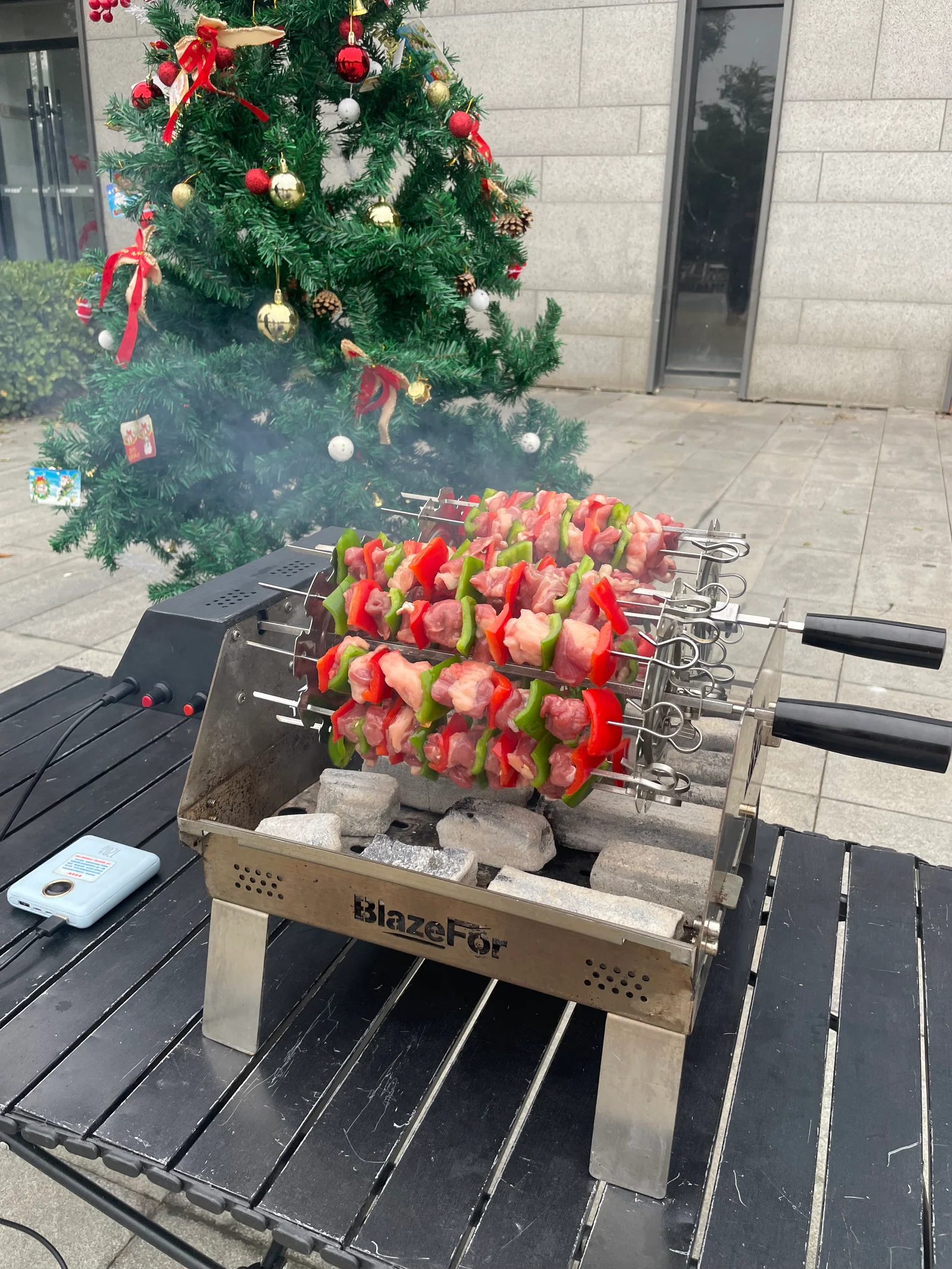
Dry-brine the chicken the day before, truss it tightly, cook it turning over medium charcoal heat (around 180–200°C / 350–400°F inside the grill) with a drip tray underneath, and take it off when the thickest part of the thigh reads 75°C (165°F). Rest 10 minutes before carving.
The chicken shop rotisserie has trained everyone's taste: golden, crackling skin and meat that pulls apart. The good news is that charcoal does it even better at home, with real smoke. The method is simple. The details are what make it great.
What you need
- 1 whole chicken, 1.5–2 kg (3.3–4.4 lb), or chicken thighs and drumsticks if your rotisserie is compact
- 1 tsp fine salt per 500 g of chicken (about 1 tsp per lb), plus your favourite rub
- Kitchen twine for trussing
- Lump charcoal or briquettes
- A drip tray and a digital meat thermometer (non-negotiable)
Step 1: Dry-brine the day before
Pat the chicken completely dry with paper towel. Sprinkle the salt evenly all over, and under the breast skin if you can. Leave it uncovered on a rack in the fridge overnight.
The salt seasons the meat deep down and helps it hold moisture. The cold air dries the skin, and dry skin is the secret to crispy skin. Don't wash raw chicken: Australia's food safety authority warns it spreads bacteria around your kitchen.
Step 2: Truss it tight
Tie the legs together and tuck the wings under the body. A compact, even shape cooks evenly. Loose wings and legs flop around, burn and spin the bird off balance. Slide the spit through the centre and lock the forks so the chicken can't slip as it turns.
Step 3: Light the coals and set up the heat
Light your charcoal and wait until it's covered in grey ash, usually 15 to 25 minutes. For rotisserie chicken you want medium heat: around 180–200°C (350–400°F) inside an enclosed grill, or the "5-second hand test" over an open grill (you can hold your hand 10 cm / 4 in above the grate for about 5 seconds).
Put a drip tray under where the chicken will turn, with a splash of water in it. That stops the fat hitting the coals and causing flare-ups.
Step 4: Let it turn
Mount the chicken, start the rotation and close the lid if your grill has one. Then leave it alone. Every time you open the lid you let the heat out.
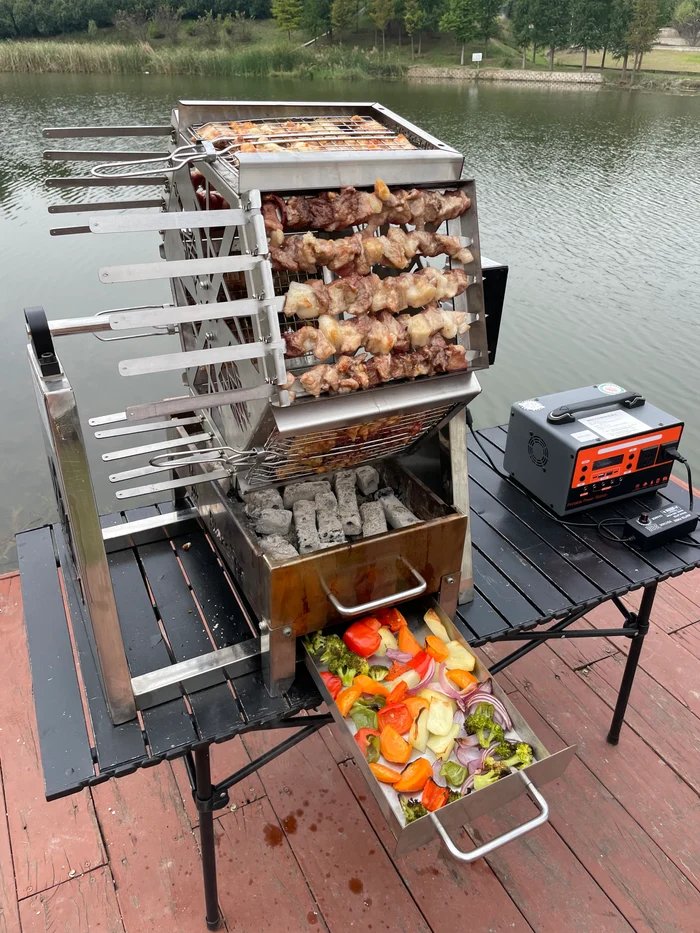
- Electric rotisserie (F3, F4): the motor does the turning. Stay nearby, keep an eye on the fire and check the coals every 30 minutes or so. On the motorised F6, cook chicken pieces in the baskets.
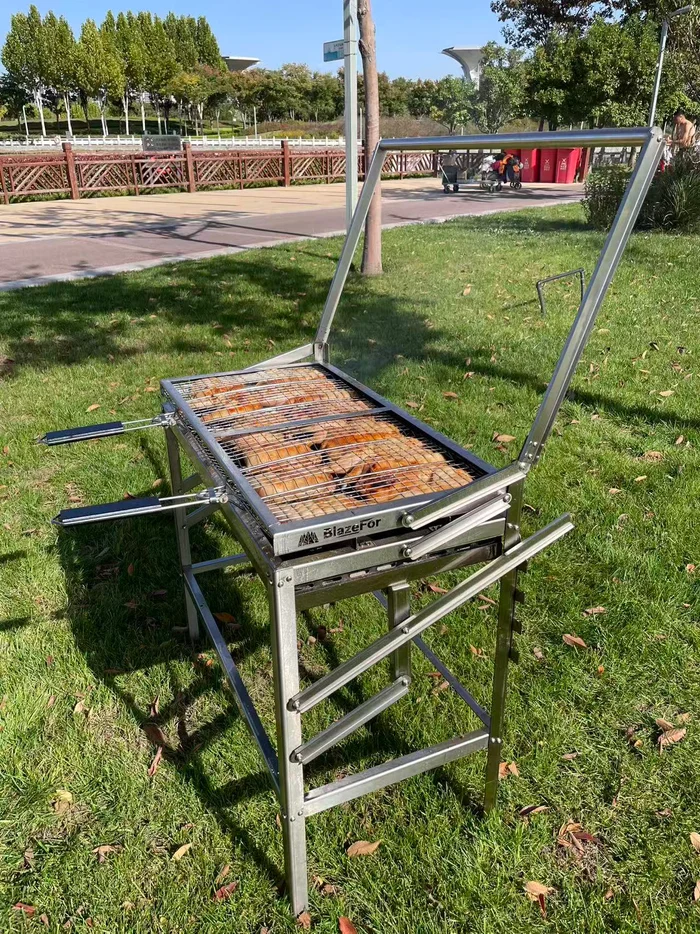
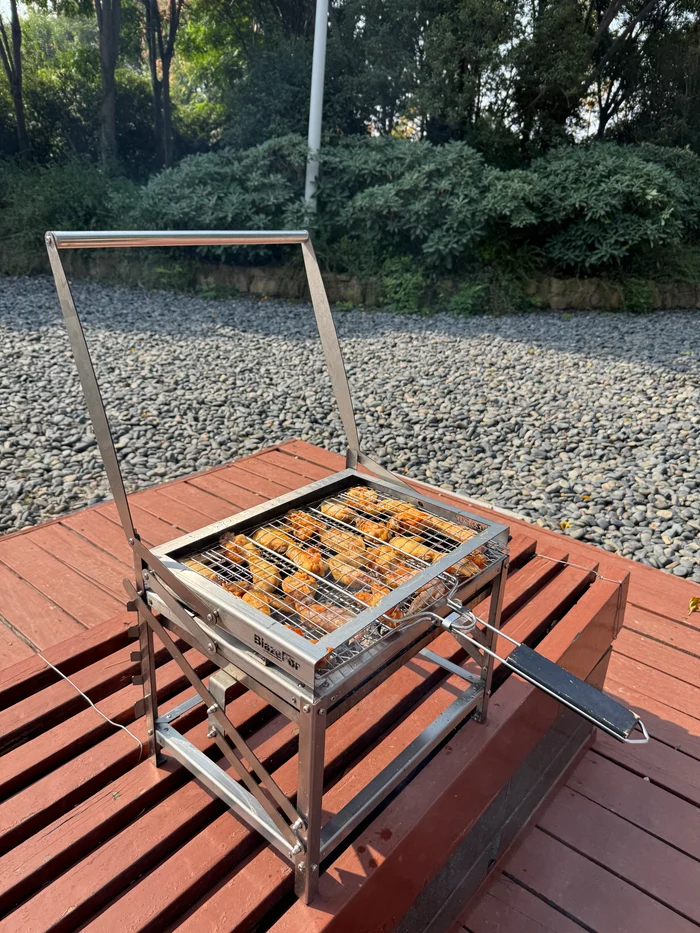
- Flip basket (F1, F2, F5): cook chicken pieces in the basket and give it a turn every few minutes.
As a starting point, plan about 45 minutes per kilo (about 20 minutes per pound) over medium heat, but treat that as a guide only. Cold, windy days can add a lot.
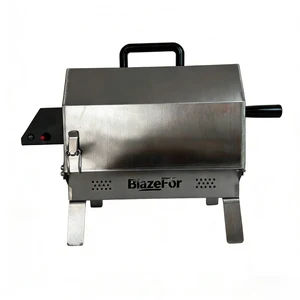 BlazeFor F3Electric Rotisserie Charcoal Oven · Basket + rotisserie + kebab rack · feeds 3–4 peopleFrom A$299 · 4.8/5 (54)
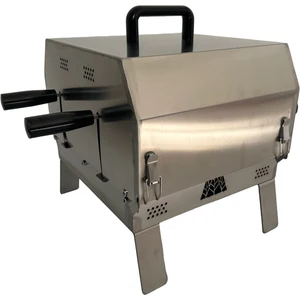 BlazeFor F4Double-Row Electric Rotisserie BBQ · 2 baskets + rotisserie + kebab rack · feeds 4–8 peopleFrom A$439 · 4.9/5 (58)
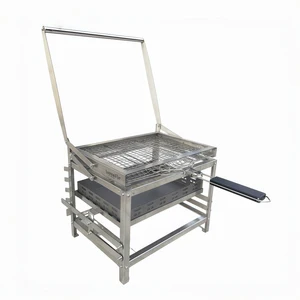 BlazeFor F1Rotating Charcoal BBQ Grill with Flip Basket · Rotating basket · feeds 2–4 peopleFrom A$269 · 4.8/5 (75)
Step 5: Check the temperature, not the clock
Start checking about 15 minutes before you expect it to be ready. Push the thermometer into the thickest part of the thigh without touching the bone.
| Where | Australia (FSANZ) | USA (USDA) |
|---|---|---|
| Thickest part of the thigh | 75°C | 165°F |
| Breast, thickest part | 75°C | 165°F |
The juices should run clear, but don't rely on colour alone. The thermometer is the only reliable test.
Step 6: The crispy-skin finish
If the meat is close to temperature but the skin isn't as golden as you'd like, move the coals a little closer (or raise the charcoal tray on the F1 and F5) for the last 5 to 10 minutes. Stay close: sugar-based rubs can go from bronze to burnt quickly.
Step 7: Rest, then carve
Rest the chicken for 10 minutes on a board, loosely covered with foil. Carve the legs off first, then the breasts, and slice across the grain.
The 5 mistakes that ruin rotisserie chicken
- Wet skin. Steam is the enemy of crunch. Dry it, then dry-brine it.
- Fire too hot. The skin burns before the inside is cooked. Medium heat, lid closed.
- Loose trussing. Floppy wings burn, and the bird wobbles off balance.
- Opening the lid every five minutes (on enclosed grills). Each look adds cooking time.
- Guessing doneness. A $20 thermometer saves a whole dinner.
Flavour ideas
- Lemon, garlic and oregano: the Greek classic, brushed on in the last 15 minutes.
- Peri-peri: chilli, garlic, paprika and lemon, rubbed on after the dry brine.
- Smoked paprika and brown sugar: a US cookout favourite. Add the sugar at the end to avoid burning.
Hungry for more? See our rotisserie cooking times chart for lamb, pork, beef and skewers.
Questions people ask
How long does rotisserie chicken take on charcoal?
Roughly 60 to 90 minutes for a 1.5–2 kg (3.3–4.4 lb) bird over medium heat. Wind, charcoal and lid use change the time a lot, so go by the thermometer, not the clock.
What temperature is rotisserie chicken done?
When the thickest part of the thigh, not touching bone, reads 75°C in Australia (FSANZ) or 165°F in the US (USDA).
How do I get crispy skin on rotisserie chicken?
Dry the skin completely, dry-brine it uncovered in the fridge overnight, don't oil it heavily, and finish the last 10 minutes with the coals a little closer or hotter.
Should I put water in the drip pan?
A little water stops the drippings from burning and smoking. It won't make the meat noticeably juicier — correct temperature and resting do that.