Rotisserie Cooking Times & Temperature Chart (°C and °F)
Printable rotisserie and spit roast chart: approximate cooking times, grill heat and safe internal temperatures for chicken, lamb, pork, beef and skewers, plus how much charcoal you need.
Cook most rotisserie meats over medium heat, 160–200°C (325–400°F), and go by internal temperature: poultry, mince and sausages to 75°C (USDA: 165°F for poultry, 160°F for ground meat); whole cuts of beef and lamb to your liking (rare from 63°C / 145°F with a rest). Times in any chart are only a starting point.
Print this page and stick it next to the grill. It answers the two questions every rotisserie cook asks: how long? and is it done?
There's one rule that matters more than every number below: times are estimates, internal temperature is the truth. Wind, outside temperature, the type of charcoal, how full the grill is and whether you have a lid can change cooking time a lot. Use a digital meat thermometer.
Two kinds of temperature: safety and taste
Food safety authorities give minimum safe temperatures for meats where bacteria can be inside the meat: poultry, mince and sausages. For whole cuts of beef and lamb, the bacteria sit on the surface, which the grill sears, so you can cook them to your taste.
| Food | Australia (FSANZ / healthdirect) | USA (USDA minimum) |
|---|---|---|
| Chicken, turkey, duck (whole or pieces) | 75°C | 165°F |
| Mince, sausages, burgers | 75°C | 160°F (165°F for poultry mince) |
| Beef and lamb steaks and roasts | Rare 63°C · medium 71°C · well done 77°C | 145°F, then a 3-minute rest |
| Pork chops and roasts | No separate figure in the guidance cited; use a thermometer | 145°F, then a 3-minute rest |
| Fish | 70°C | 145°F |
Many cooks pull a beef or lamb roast at 55–60°C (130–140°F) for medium-rare. That is below both healthdirect's 63°C and the USDA's 145°F guidance, so it's a personal choice, not an official recommendation. The chart below shows both.
Grill heat: what "low", "medium" and "hot" mean
On an open charcoal grill, use the hand test: hold your palm about 10 cm (4 in) above the cooking level and count.
| Heat | Grill temperature | Hand test | Use it for |
|---|---|---|---|
| Hot | 230°C+ / 450°F+ | 2 seconds | Steaks, prawns, quick skewers |
| Medium-hot | 200–230°C / 400–450°F | 3–4 seconds | Kebabs, chicken pieces, sausages |
| Medium | 160–200°C / 325–400°F | 5–6 seconds | Whole chicken, lamb, pork belly |
| Low | 120–160°C / 250–325°F | 8+ seconds | Slow roasts, keeping food warm |
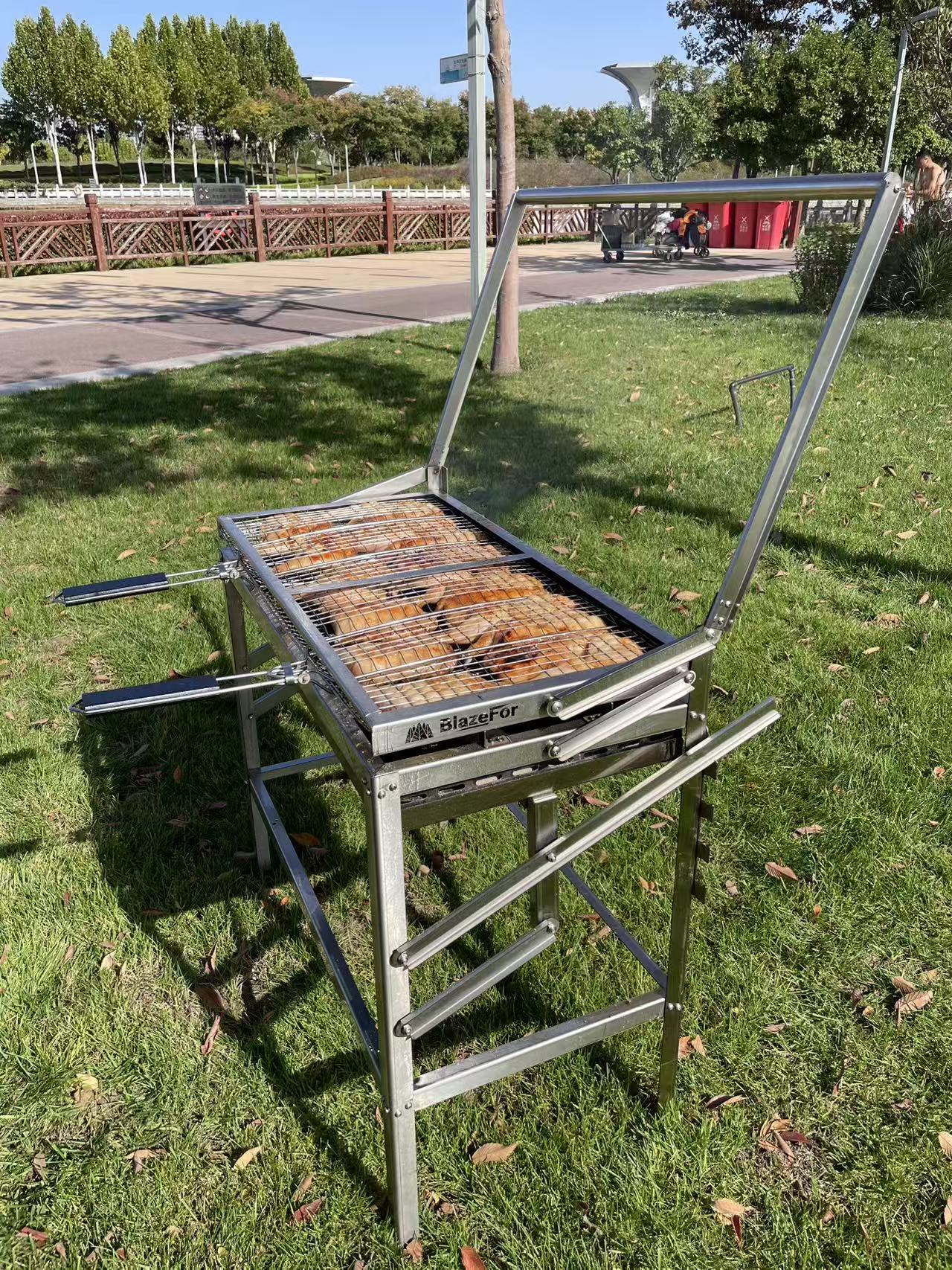
On adjustable grills like the BlazeFor F1 and F5, you change the heat by raising or lowering the charcoal tray. On the F7, the air vents do the job: more air, hotter fire.
Rotisserie and spit roast cooking times
Approximate times over medium heat, for food at fridge temperature. Finish every item by thermometer.
| Food | Size | Approx. time | Take it off at |
|---|---|---|---|
| Whole chicken | 1.5–2 kg / 3.3–4.4 lb | 60–90 min | 75°C / 165°F in the thigh |
| Chicken thighs & drumsticks (basket) | — | 30–40 min | 75°C / 165°F |
| Chicken wings (basket) | — | 25–35 min | 75°C / 165°F |
| Lamb leg, boned and tied | 1.5–2 kg / 3.3–4.4 lb | 60–90 min | 63°C / 145°F (official minimum), lower only by personal choice |
| Pork belly pieces | 1 kg / 2.2 lb | 60–80 min | 75°C+ for tender, crisp belly |
| Beef roast (rump, sirloin) | 1.5 kg / 3.3 lb | 50–75 min | 63°C / 145°F (official minimum), lower only by personal choice |
| Picanha, sliced and skewered | 3–4 cm thick | 15–25 min | 63°C / 145°F (official minimum), lower only by personal choice |
| Chicken kebabs | 3 cm cubes | 12–18 min | 75°C / 165°F |
| Lamb or beef kebabs | 3 cm cubes | 8–14 min | To taste |
| Prawn skewers | Large prawns | 4–6 min | Opaque and pink all through |
| Sausages | Thick | 15–20 min | 75°C (AU) / 160°F (USDA) |
| Corn, capsicum, mushrooms | — | 10–20 min | Tender, charred |
How much charcoal do you need?
- Large, whole-animal spit roasters: a widely used rule is about 1 kg of charcoal for every 1 kg of meat, topped up during a long cook.
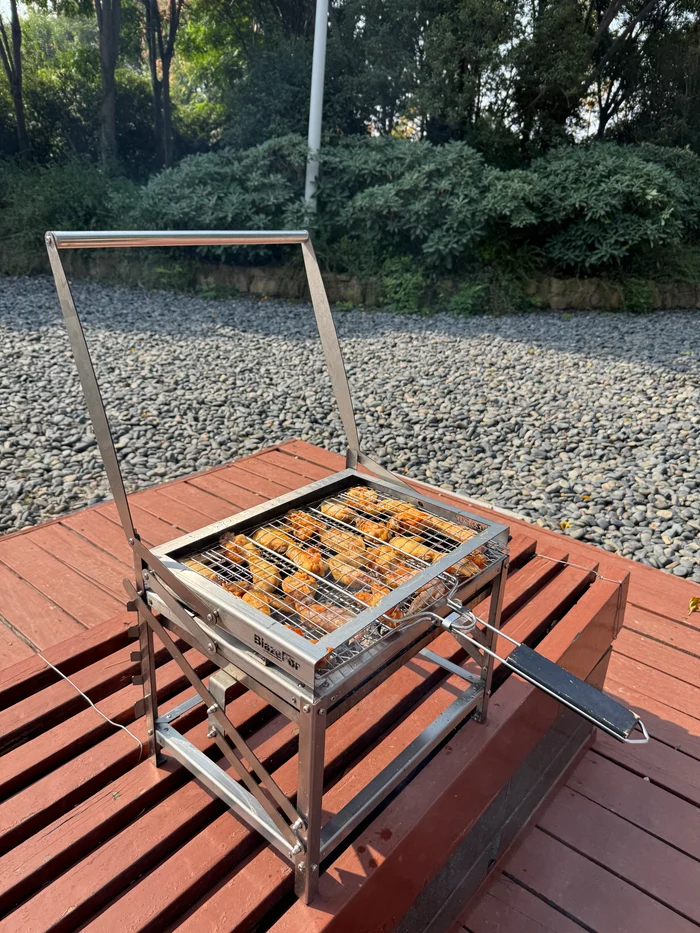
- BlazeFor grills (F1–F7): you need far less. Spread an even layer across the tray, light it, and add a handful of fresh coals every 30 to 40 minutes on long cooks.
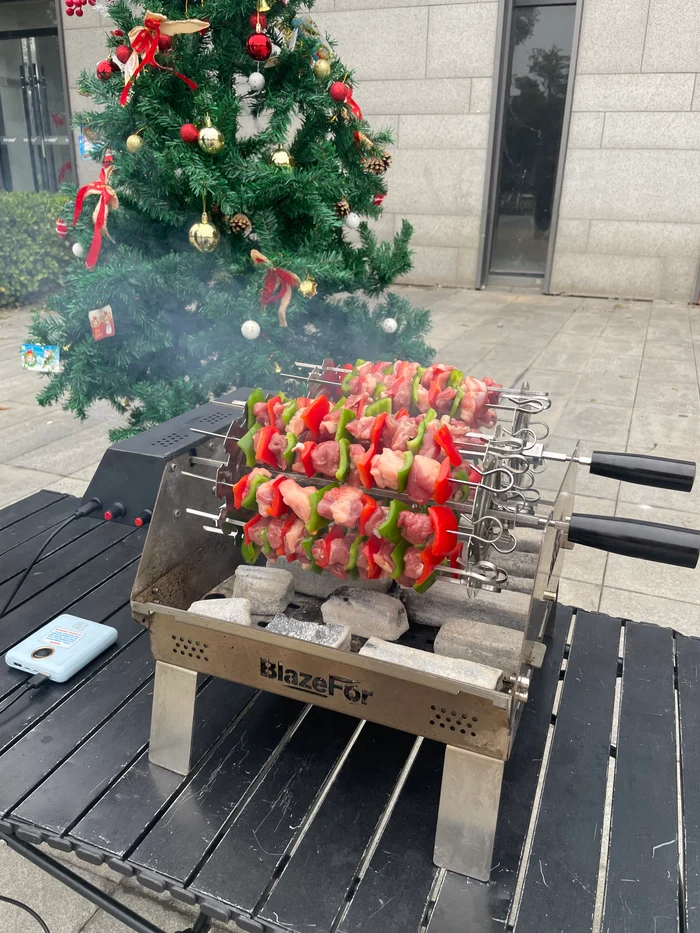
- Skewers only: a single even layer is plenty; they're done in under 20 minutes.
Lump charcoal lights faster and burns hotter. Briquettes burn more evenly and for longer. Either can be used in BlazeFor charcoal grills.
Resting times
| Food | Rest |
|---|---|
| Whole chicken | 10 min |
| Lamb leg or beef roast | 10–15 min, loosely covered |
| Skewers and pieces | 2–3 min |
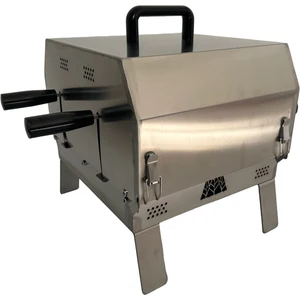 BlazeFor F4Double-Row Electric Rotisserie BBQ · 2 baskets + rotisserie + kebab rack · feeds 4–8 peopleFrom A$439 · 4.9/5 (58)
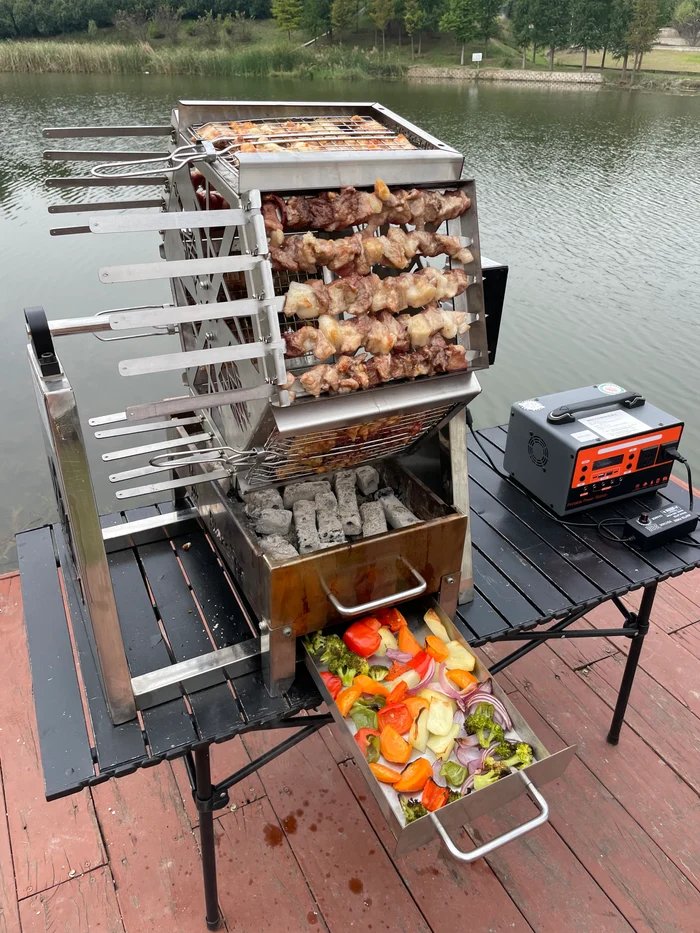
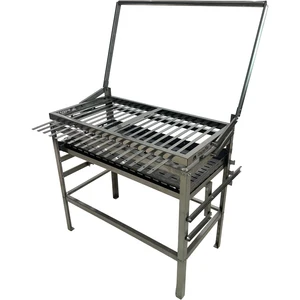 BlazeFor F5 Skewer17-Skewer Rotating Kebab BBQ · 17 skewers · feeds 8–15 peopleFrom A$589 · 4.8/5 (36)
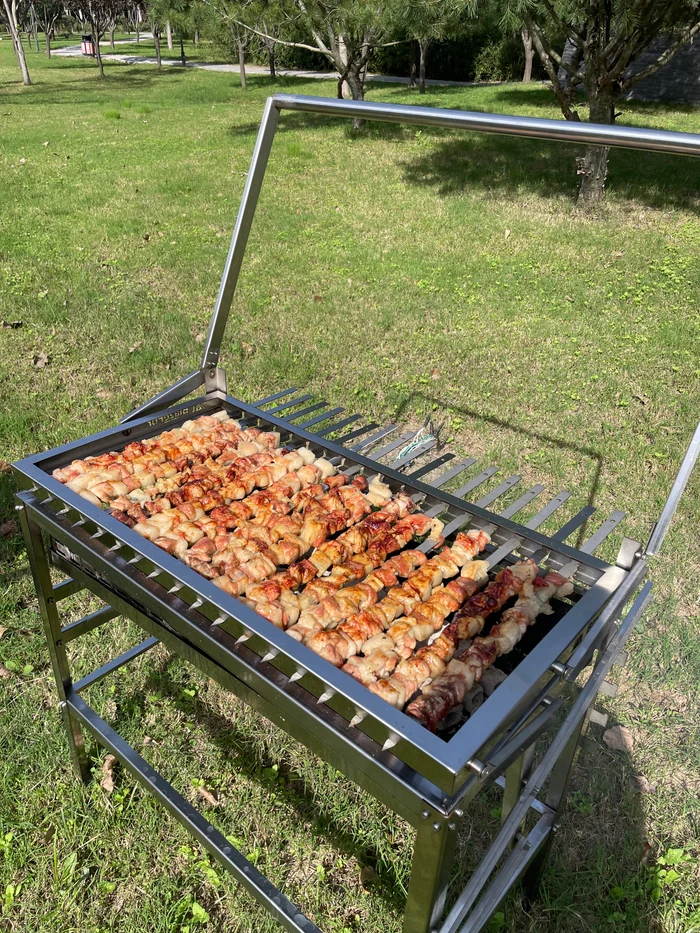
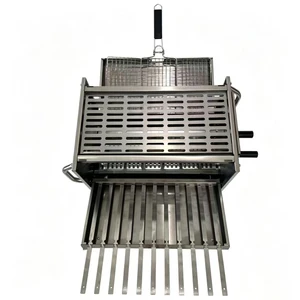 BlazeFor F74-in-1 Charcoal BBQ Oven with Skewers · 11 skewers + basket + pan + trays · feeds 6–10 peopleFrom A$769 · 4.9/5 (11)
Want the full method for the most popular cook of all? Read how to cook rotisserie chicken on charcoal.
Questions people ask
How long does a spit roast take per kg?
As a rough guide, 30 to 45 minutes per kilo over medium charcoal heat for poultry and lamb, longer for big pork cuts. Always finish by temperature, not time.
How much charcoal do I need for a spit roast?
For large, whole-animal spit roasters, a common rule of thumb is about 1 kg of charcoal per kg of meat. Compact rotating grills need far less: fill the tray to an even layer and top up as it burns down.
What is a safe temperature for rotisserie chicken?
75°C in the thickest part according to Food Standards Australia New Zealand, or 165°F according to the USDA.
What temperature should a rotisserie grill be?
Medium heat, roughly 160–200°C (325–400°F) for most roasts and whole chickens, and hotter for skewers and small pieces that cook in 10 to 20 minutes.